Premier League clubs have never placed more value on defensive midfielders than now.
Manchester City built one of English football’s greatest teams around Rodri, Arsenal transformed after signing Declan Rice, while Chelsea, Liverpool and Crystal Palace have all invested heavily in their defensive midfield.
Over the past decade, the role has evolved drastically, writes Transfer News Blitz‘s Joseph Kan’gethe.
The traditional No.6 was judged solely on tackles, interceptions, and protecting the defence.
A modern No.6 is expected to do much more by dictating the tempo, having composure in the build-up, progressing possession, and laying the foundation for the attackers to flourish.
Why has the defensive midfield role changed in the Premier League?
The modern No.6 didn’t emerge because football suddenly produced better midfielders.
The role evolved because Premier League football changed around it.
As managers demanded more possession, higher defensive lines and aggressive pressing, the traditional ball-winning midfielder was replaced by a more versatile role.
Teams needed one player capable of linking every phase of the game, from building attacks to protecting the defence when possession was lost.
That responsibility begins in the build-up play.
Instead of passing sideways, modern defensive midfielders regularly drop between or alongside the centre-backs to receive possession under pressure.
Their job is to keep the ball moving, playing through the opposition press and helping their teams progress play into the opponent’s half.
Their influence becomes even more important when attacks break down.
Rather than dropping towards their own half, elite defensive midfielders hold intelligent positions behind the ball.
Coaches call this rest defence, ensuring teams are protected against counter-attacks before they develop.
Out of possession, the role has become even more demanding.
Top teams counter-press immediately after losing possession, with the defensive midfielder closing passing lanes, recovering loose balls and disrupting transitions before opponents can build attacks.
Their greatest responsibility, however, is controlling the game rhythm.
Top-tier No.6s know when to slow play, increase the tempo, or play forward.
They also cover spaces left by attacking teammates, giving others the freedom to take risks while maintaining the team’s balance.
That evolution has changed how clubs identify and recruit defensive midfielders.
Some have adapted to the demands better than others, with a select group setting the standard for the modern Premier League No.6.
READ MORE: Chelsea announce signing of set-piece guru Austin Macphee

The best Premier League No.6s
The top-tier Premier League No.6s have different unique strengths that make them stand out.
Each one of them has different talents, and this illustrates that there is no single formula for becoming a world-class defensive midfielder.
The Premier League’s elite No.6s have reached the top in different ways, each bringing a unique blend of technical quality, tactical intelligence, and defensive discipline.
Together, they show why the position has become very influential and one of the hardest to master.
Rodri
Rodri remains the benchmark for the No.6.
Manchester City’s dominance under Pep Guardiola was built on his ability to dictate possession, protect the defence, and control the tempo of matches.
His consistency and positional intelligence allowed City to sustain attacks while remaining secure under transitions, setting the standard for the role across the league.
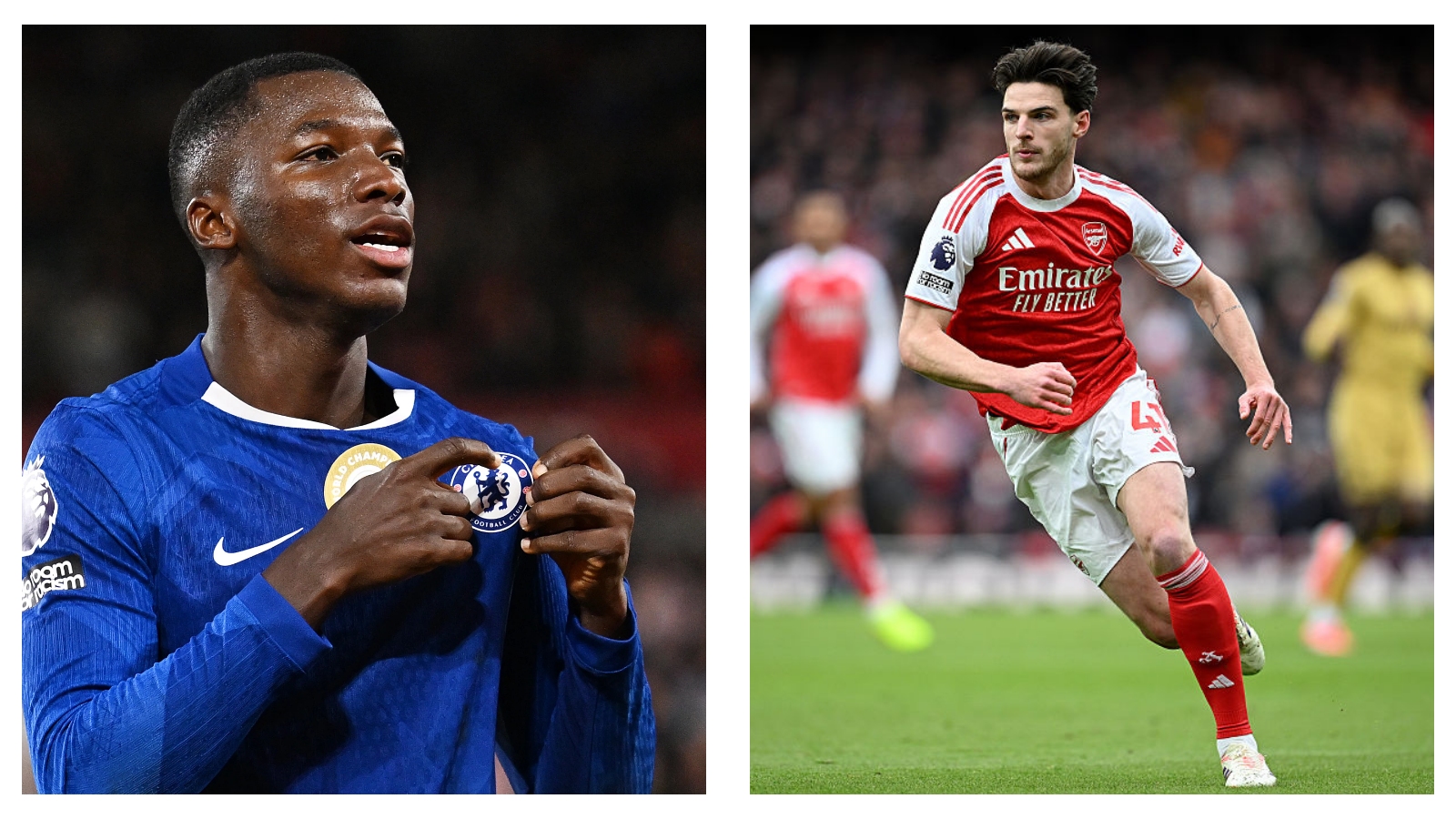
Declan Rice
Rice’s ability to break up attacks, carry the ball through midfield and support attacks gives Arsenal a rare combination of defensive security and attacking drive.
His athleticism, leadership, and tactical versatility make him one of the league’s standout defensive midfielders.
Moises Caicedo
Moises Caicedo’s relentless ball-winning ability and tactical discipline establish him as one of the league’s leading defensive midfielders.
His ability to recover possession, disrupt opposition build-ups, and cover large areas of the pitch has made him a pillar in Chelsea’s midfield.
Few players combine defensive work rate and consistency like Caicedo brings every week.
Ryan Gravenberch
Ryan Gravenberch represents the modern physical No. 6 who combines athleticism with progressive ability.
His ball-carrying power and press resistance allow him to break lines from deep midfield areas.
While still developing his defensive positioning and consistency, Gravenberch’s ability to drive forward with possession gives Liverpool a unique attacking threat.
Adam Wharton
Adam Wharton offers exceptional technical and playmaking ability in tight spaces.
His strength lies in positional awareness, passing accuracy and ability to control the game’s rhythm.
Unlike many physically dominant midfielders, Wharton influences games through positioning, composure, and his ability to find progressive passes that break opposition structures.
ALSO ON TNB: Jordan Henderson joins Chelsea as Trevoh Chalobah nears Como transfer

Why clubs are spending big money on the No.6 position
A few seasons ago, the biggest transfer fees were reserved for prolific forwards and creative playmakers.
Today, many Premier League clubs are investing just as heavily in defensive midfielders because an elite No.6 influences every phase of the match.
One player can improve both a team’s attacking rhythm and its defensive stability, making the position one of the hardest to replace.
Recent transfer fees illustrate that growing importance.
Arsenal paid £115 million for Declan Rice, Chelsea invested £115 million in Moises Caicedo, while Manchester City paid £70 million to bring Rodri to the Etihad.
Those fees were investments in players expected to shape a team’s identity for years.
As tactics continue to evolve, clubs are looking for all-round midfielders capable of controlling possession, helping their teams defensively and adapting to different phases of the game.
That rare combination is why top Premier League clubs are willing to spend record fees on elite No.6s.
The engine behind modern teams
The modern Premier League No.6 has become far more than a defensive midfielder.
They set the tempo, protect the team, link defence with attack and often determine whether a tactical system fails or succeeds.
Their influence may not always dominate the highlights, but it shapes almost every phase of a match.
That’s why the position has evolved to become one of the most valuable and why every ambitious club is determined to sign the right player to perform these responsibilities.
READ NEXT: Chelsea analysis: Five talking points ahead of Xabi Alonso’s first season in charge